
Updating a Victorian Bathroom in Plymouth: Keeping the Character, Getting a Modern Finish
Victorian bathroom renovation in Plymouth is a genuinely different project from updating a modern house. The properties themselves - the terraces of Mutley, Lipson, and Greenbank, the larger villas of Mannamead and Peverell - were built for a different era of plumbing, and the bathrooms in them reflect that. Often added later than the rest of the house, frequently converted from box rooms or landing spaces, and almost always full of pipes and layouts that don't follow any obvious logic, these rooms present both constraints and opportunities. Plymouth has a significant stock of Victorian housing - roughly 15% of the city's residential properties predate 1900 - and homeowners who approach these renovations well end up with bathrooms that feel genuinely distinctive rather than generic. The key is understanding what to preserve and what to update.
What's Worth Keeping in a Plymouth Victorian Bathroom
Victorian bathrooms have details that are genuinely difficult to replicate in a modern refurbishment. Cast iron baths, where they exist, are worth restoring if the enamel is restorable and the structure is sound - re-enamelling a cast iron bath typically costs £200 - £400 and gives another 20-30 years of service. Original encaustic or Victorian floor tiles, if present and in reasonable condition, are worth cleaning rather than lifting - these tiles are expensive to replace authentically and the originals have a quality of finish that modern reproductions often lack.
Original Victorian features worth assessing rather than automatically removing include: dado rails and Victorian-profile cornicing (these can be retained and painted), original sash windows if the bathroom has one (replace the glazing with frosted if privacy is needed, don't replace the window itself), and original door furniture and ironmongery.
Bathroom Fitters Plymouth works regularly with Plymouth's Victorian housing stock and approaches these projects differently from a standard bathroom strip-out - assessing what's genuinely salvageable before anything is removed.
Navigating the Plumbing in a Victorian Plymouth Property
Victorian-era plumbing is the main technical challenge in these renovations. Many Plymouth Victorian terraces still have sections of original lead pipe - particularly in older parts of the city like Stonehouse and parts of Devonport. Lead piping is not automatically dangerous if undisturbed, but any renovation that touches the water supply is a good opportunity to replace it entirely. The NHS guidance on lead in drinking water recommends replacing lead pipes when building work is carried out.
Drainage in Victorian properties is typically gravity-fed to clay or cast iron drains that run under the floor. Re-positioning a toilet in a Victorian Plymouth bathroom requires careful thought about fall angles - Victorian houses sit lower to the ground than later builds, leaving less room for drainage reconfiguration beneath the floor. Macerator toilets can help when repositioning is needed without sufficient fall for gravity drainage, but they're a compromise solution and add long-term maintenance complexity.
Working with Unusual Room Shapes
Victorian bathroom conversions in Plymouth often involve rooms that weren't designed as bathrooms. The ceiling heights are usually excellent - 9-10 foot is common in larger Victorian terraces - but the width can be restrictive if the room was originally a landing cupboard or boxroom. Working with long, narrow bathroom footprints is a specific skill set. Furniture placement that would feel natural in a wider room often doesn't work; the focus shifts to wall-hung fittings, slim baths, and high-level storage rather than floor-standing units.
Period-Appropriate Design Choices That Still Work Today
Getting the design right in a Plymouth Victorian bathroom means choosing materials and fittings that suit the building without turning it into a period pastiche.
For floors, encaustic and geometric Victorian tiles, black-and-white chequerboard layouts, and hexagonal mosaic all work well and are widely available from UK tile manufacturers - the Tile Association's member directory is a good starting point. Modern porcelain versions are more forgiving of the uneven floors typical in Victorian houses.
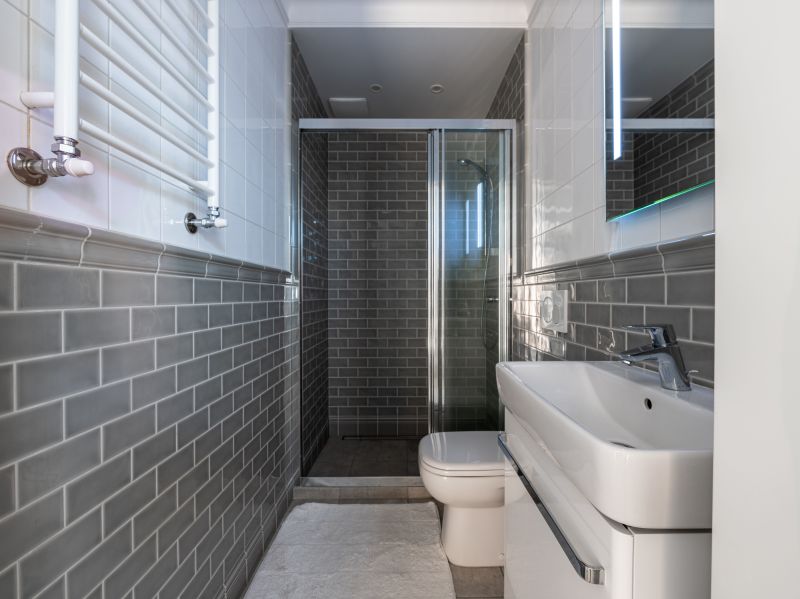
On the walls, half-tiling with white metro or subway tiles above a dado rail is a period-sympathetic choice that also happens to be practical: easy to clean, durable, and available at every price point.
For sanitaryware, roll-top baths, pedestal basins, high-level cisterns, and lever-handle brassware all suit Victorian aesthetics. Modern equivalents from most UK manufacturers give the same visual result with better water efficiency - a real consideration in Plymouth where water is metered for most properties.
Column radiators are the period-appropriate choice for heating. Chrome or anthracite finishes both work. Heated towel rails in a column style are a practical update that doesn't look out of place.
Ventilation - the Victorian Bathroom's Weak Point
Victorian bathrooms were not designed with mechanical ventilation in mind. Where a window exists, it was intended as the sole means of airflow - fine in an era of single-glazing and draughty buildings, less adequate in a renovated home where draughts have been eliminated and glazing sealed. Plymouth receives around 975mm of rain per year - significantly above the UK average of 600mm - and the mild, damp south-western climate means moisture management is genuinely important.
Any Victorian bathroom renovation in Plymouth should include a correctly sized extractor fan with appropriate ducting. This is also covered in more detail in our wet room installation guide for Plymouth, which addresses waterproofing requirements in older properties where wall structure can be less predictable.
What a Victorian Bathroom Renovation Costs in Plymouth
Costs vary significantly with the condition of the original room, the extent of plumbing work, and the specification of materials.
Budget Victorian-style renovation (updated fittings, period-style tiles, no structural changes): £4,000 - £7,000.
Mid-range renovation (new suite, period-sympathetic tiling, ventilation upgrade, minor plumbing reconfiguration): £7,000 - £12,000.
Full premium renovation (restored or replaced cast iron bath, bespoke tiling layout, full plumbing replacement including lead pipe removal, new window glazing): £12,000 - £20,000+.
Lead pipe removal, if required, typically adds £800 - £2,500 to the total depending on how extensive the original installation was.
FAQ
Q: Is it worth renovating a Victorian bathroom in Plymouth or just doing a standard modern refurbishment?
A period-sympathetic renovation usually adds more to the property value than a standard modern bathroom in a Victorian house - buyers of Victorian properties tend to value authenticity. It also tends to feel better to live in. The main drawback is that it takes more planning and experienced tradespeople than a straightforward like-for-like replacement.
Q: Do I need planning permission to renovate a bathroom in a Plymouth Victorian terrace?
Not typically - internal bathroom renovations don't usually need planning permission. If your property is listed or in a conservation area, the rules differ. Plymouth has several conservation areas covering older housing stock; check with Plymouth City Council if you're unsure about your property's status.
Q: Can original Victorian floor tiles be saved?
Often yes, if they're not badly cracked or missing. Victorian encaustic and geometric tiles are relatively forgiving of superficial damage. Professional cleaning and sealing can transform tiles that look beyond saving. A tile specialist should assess them before you decide to lift and replace.
Q: What's the best way to handle lead pipes found during a Plymouth Victorian bathroom renovation?
Replace them. A Victorian bathroom renovation is a natural point to address lead pipework - the disruption is already happening and the cost is lower than returning to do it separately. NHS guidance recommends replacing lead pipes when building work is carried out. This is particularly relevant in Plymouth, where some of the older terraced streets still have original supply pipes.
Q: How long does a Victorian bathroom renovation take in Plymouth?
A straightforward refurbishment with no structural changes takes 5-10 working days. A more involved project - lead pipe replacement, floor levelling, full re-tiling - takes 2-4 weeks. Victorian properties sometimes produce surprises once work starts (hidden damp, unusual drainage, original features that affect the plan), so good contractors allow contingency time.
You might also like
Bathroom Fitters Plymouth