
Bathroom Storage in Plymouth Homes: Making a Small Space Work Harder
Plymouth has a lot of older housing - Victorian terraces in Greenbank and Hyde Park, inter-war semis across Peverell and Hartley, 1960s and 70s builds throughout Plympton and Plymstock - and most of them share a common characteristic: bathrooms that were designed around the bare minimum of what was needed at the time, with very little thought given to storage. The result is that a huge number of Plymouth homeowners are working with a functional bathroom that's not quite big enough for the stuff that actually needs to live in it.
Where Storage Goes Wrong in Most Bathrooms
Bathroom Fitters Plymouth sees the same problem repeated across most standard bathroom layouts: the basin is too large relative to the room, there's a pedestal taking up floor space that could be a vanity unit, and the area above the toilet is either blank wall or a badly-fitted shelf. None of these are expensive problems to solve in a renovation, but they're nearly impossible to retrofit well without replanning the layout.
The Vanity Unit vs Pedestal Decision
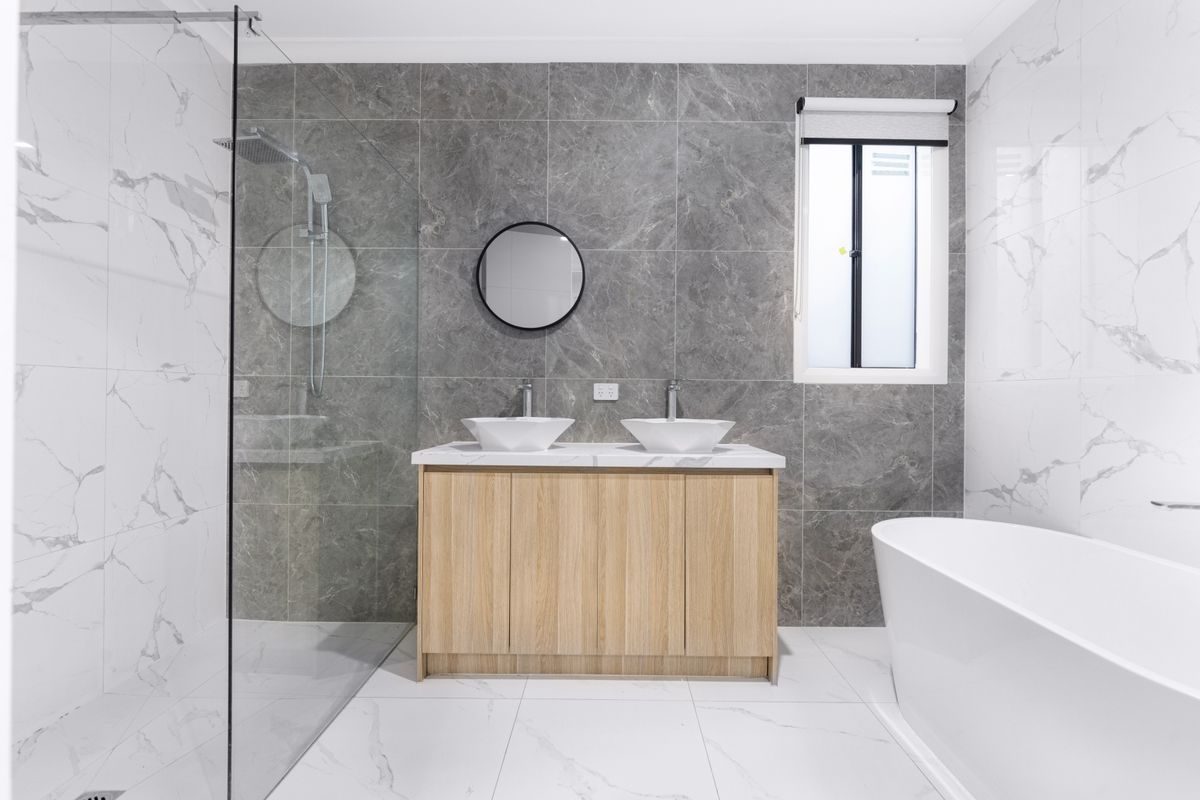
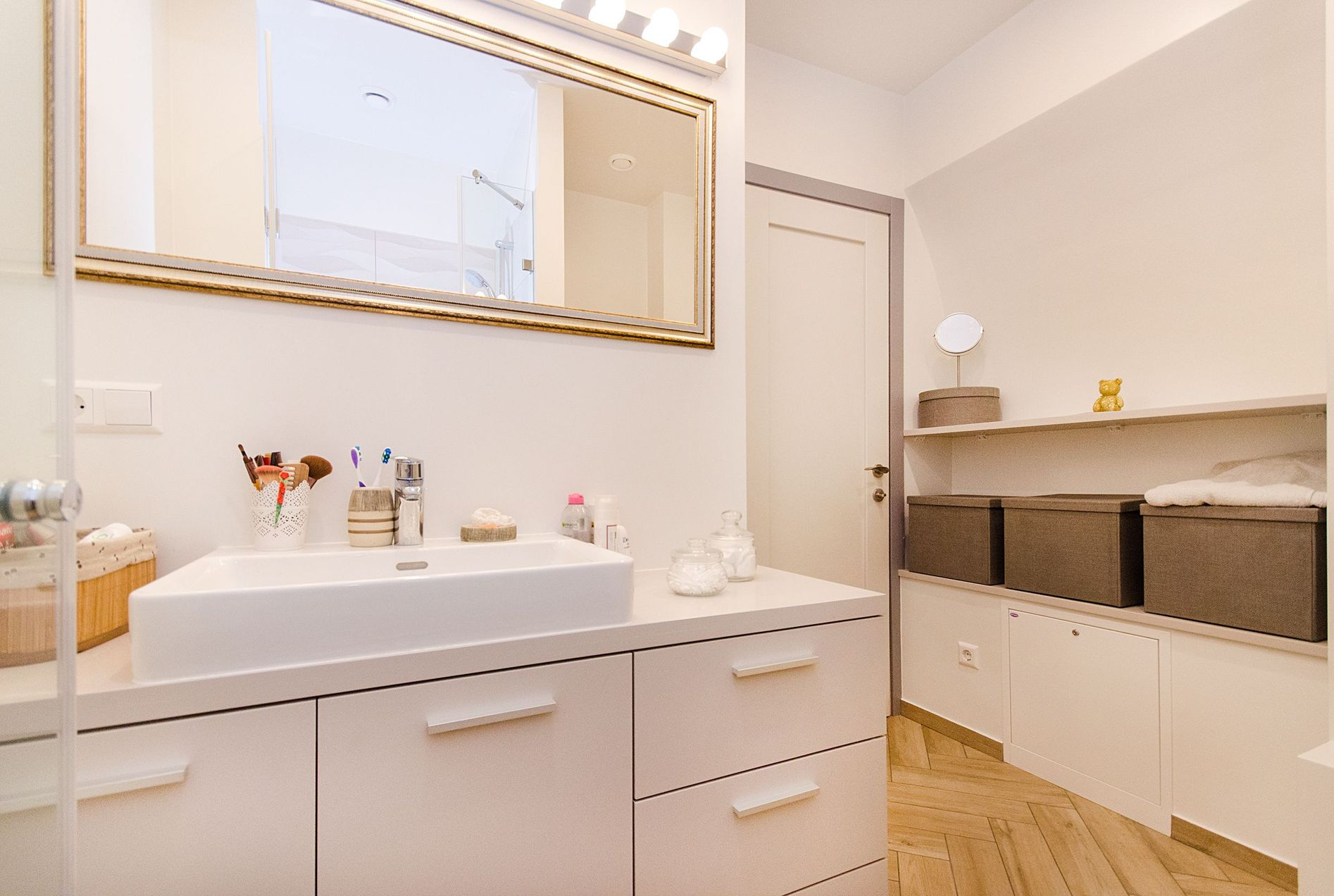
This is the single most impactful storage change in most bathrooms. A pedestal basin is cheaper to supply, takes up floor space with its base, and offers zero storage. A wall-hung vanity unit - or a floor-standing one with a cupboard below - provides the same basin footprint with a meaningful amount of closed storage underneath for cleaning products, spare toiletries, and everything else that usually ends up on the side of the bath. In a small Plymouth bathroom where every centimetre matters, this is usually the first change worth making.
Alcoves and Recessed Niches
Older Plymouth properties often have alcoves created by the chimney breast running through adjacent rooms, and these spaces, particularly in the bathroom, are genuinely useful for a full-height cabinet or shelving unit that sits flush with the wall rather than protruding into the room. In bathrooms without natural alcoves, recessed shower niches, a shelf built into the wall between studs to hold shampoo and soap, are increasingly standard in renovations. A properly tiled niche adds no depth to the shower enclosure and removes the need for shower caddies hanging off the fittings.
Above the Toilet: Where Space Usually Gets Wasted
The wall above the toilet is one of the most under-used surfaces in most bathrooms. A properly fitted back-to-wall unit with a cistern concealed inside the unit frees up the cistern space for a shelf or cupboard on top. Alternatively, a floating shelf at the right height, with the toilet roll holder integrated below it rather than on a separate fitting, makes the area much more functional without looking cluttered.
Mirror Cabinets Over Medicine Cabinets
We've covered tile choices in Plymouth bathrooms elsewhere, and the finishes in a bathroom affect how storage feels as much as how it functions. A mirror cabinet - a cabinet with a mirrored front rather than a solid door - does double duty by replacing the bathroom mirror and providing a closed storage space behind it, without making the room feel smaller. Compared to a medicine cabinet with a solid door, they tend to work better in smaller rooms where every reflective surface helps the space feel larger.
Planning Storage Before the Renovation Rather Than After
The frustration with bathroom storage in most Plymouth homes is that it's retrofitted around an existing layout rather than designed in from the start. A bathroom renovation is the right moment to rethink where the basin goes, whether the toilet should be back-to-wall, and where the niches should be placed - because once the tiles go up and the fittings are in, the options narrow considerably. Getting the storage plan sorted at the design stage rather than at the end costs no more and makes a significant practical difference.
FAQ
Q: What's the best storage upgrade in a small Plymouth bathroom?
Replacing a pedestal basin with a vanity unit is usually the single most impactful change, as it adds meaningful closed storage in the same floor footprint with no additional space needed.
Q: Are recessed shower niches worth adding in Plymouth homes?
Yes - a properly tiled niche adds no depth to the shower area, removes the need for hanging caddies, and is much easier to clean. It's best planned before tiling starts rather than cut in afterwards.
Q: Can a mirror cabinet work in a small bathroom?
Well - a mirror cabinet replaces the need for a separate mirror while providing closed storage. In a small room, the reflective surface also helps the space feel larger compared to a solid-door cabinet.
Q: When should I plan bathroom storage - before or after the renovation starts?
Before. Layout decisions like basin type, toilet position, and niche placement are most easily made at the design stage. Once tiles are up and fittings are in, options narrow considerably.
You might also like
Bathroom Fitters Plymouth