
Macerators and Soil Pipes in Plymouth Bathrooms: When You Need a Saniflo and What It Costs
Somewhere between "we'd love a shower room in the loft" and "the plumber says the soil pipe is 9 metres away on the other side of the house" sits the macerator question. It comes up constantly in Plymouth, where a big chunk of the housing stock is Victorian and Edwardian terraces with a single rear soil stack, or post-war semis where the original bathroom placement made sense in 1952 and makes none now. Roughly 21% of Plymouth's homes were built before 1919, and around 45% before 1965, which is a polite way of saying the drainage was designed around one bathroom and nobody anticipated the second. A macerator installation typically runs £750 to £1,600 fitted in Plymouth, against £1,800 to £4,500 for running new gravity drainage. That gap is why the question gets asked. Here is when the cheaper answer is the right one, and when it will cost you more in the long run.
What a Macerator Actually Does, and Why Plymouth Homes Need Them
A macerator is a pump in a box. Waste from a toilet, basin, shower or bath goes into a sealed unit, a blade assembly reduces solids and paper to a slurry, and a pump pushes that slurry along a small-bore pipe - typically 22mm or 32mm, roughly the diameter of a cable - until it reaches a point where it can join the main 110mm soil pipe by gravity. The whole point is that 22mm pipe can be run almost anywhere. Under a floor, along a skirting, boxed into a corner, up and over a doorway. A 110mm soil pipe cannot.
The units pump a surprising distance. Most domestic macerators will shift waste around 4 to 5 metres vertically, or up to 50 metres horizontally, though the two trade off against each other - every metre of lift costs you roughly 10 metres of horizontal run. In practice a Plymouth loft conversion 4 metres above the soil connection with a 12-metre horizontal route is comfortably within spec for a mid-range unit.
Where they earn their keep locally is the terraces. Streets across Stoke, Peverell, Mutley and Greenbank were built with the soil stack on the rear elevation and the bathroom directly off it. Put a cloakroom under the stairs at the front of that house and you are 10 to 14 metres from the stack with a solid concrete floor in between. If you are weighing that up for your own property, it is worth getting someone out to look at the actual pipe runs before you commit to a layout - the team at Bathroom Fitters Plymouth can usually tell within twenty minutes on site whether gravity is realistic or whether you are in macerator territory.
The Three Situations Where It Is Almost Always a Macerator
Loft conversions and attic en-suites, because you are above the point where the existing soil stack has a convenient connection and boxing in a 110mm pipe through a bedroom below is nobody's idea of a good time. Basement and lower-ground bathrooms, common in the stepped terraces around Mount Gould and parts of Stonehouse, where you are below the outgoing drain and gravity physically cannot help you. And cloakrooms in the "wrong" half of the house, which is the single most common reason a Plymouth homeowner ends up with one.
The Rules: Part H, Part G, and Why the Regulations Matter Here
This is where a lot of online advice gets it wrong. Macerators are legal and widely used, but Building Regulations treat them as a secondary option rather than a default. The relevant guidance sits in Approved Document H on drainage and waste disposal, and the principle it sets out is straightforward: a WC discharging through a macerator should not be the only WC in the property, and there should be access to a conventional gravity-drained WC in the same building.
The reasoning is about power. A macerator stops working in a power cut. If it is your only toilet, a two-day outage becomes a genuine habitability problem. So the rule is not "you cannot fit one," it is "you cannot make it your only one." For almost every Plymouth homeowner adding a second bathroom, that condition is met automatically.
There is a second regulation that catches people out more often. Approved Document G covers sanitation, hot water safety and water efficiency, and it sets requirements around ventilation and the backflow protection on any connection to the mains water supply. A macerator installation that also involves a new basin or shower feed needs the same backflow protection as any other - and if you are in a flat, there may be additional restrictions in your lease about pumped discharge into a shared stack.
Building Control: Do You Need It?
Adding a new bathroom or WC to a Plymouth home is notifiable work under Building Regulations, whether it uses a macerator or gravity drainage. That is not a macerator-specific rule - it is true of any new sanitary fitting on a new drainage run. Expect a Building Control application through Plymouth City Council or an approved inspector, typically £300 to £600 for a bathroom addition. If your installer is registered with a competent person scheme for the plumbing element, some of it can be self-certified, but the drainage and structural elements usually cannot.
What It Costs in Plymouth in 2026
The unit itself is the small part of the bill. Here is a realistic breakdown:
- Basic macerator unit, basin and WC only (Saniflo Sanicompact, Saniflo Up or equivalent): £320 - £500
- Mid-range unit handling WC, basin and shower: £500 - £800
- Heavy-duty unit taking WC, basin, shower and bath, or a longer pump run: £800 - £1,400
- Installation labour, 1 - 2 days: £350 - £700
- Pipe runs, boxing in, making good: £150 - £400
- Electrical supply, fused spur, Part P certified: £120 - £250
A straightforward cloakroom macerator in a Plymouth semi lands around £900 to £1,300 all in. A loft en-suite with a heavy-duty unit, a longer run and full making-good sits closer to £1,600 to £2,200.
Against that, gravity drainage for the same loft en-suite means a new 110mm soil connection, which in a Plymouth terrace often involves an external stack, scaffold access, and possibly a new connection to the below-ground drain. £2,400 to £4,500 is typical, and it climbs fast if the property is in a conservation area where an external plastic stack on a front elevation will not be approved. That last point matters around the Barbican, parts of Stoke and the Hoe conservation areas, where materials and external alterations are controlled.
Running Costs and Lifespan
A domestic macerator uses roughly 400 to 600 watts while running, but it only runs for 10 to 20 seconds per flush. Annual electricity cost for a normally used second bathroom is somewhere around £4 to £10 - genuinely trivial. The real cost is replacement. Expect 10 to 15 years from a well-maintained unit in a household that treats it properly, and 3 to 6 years from one that does not. Replacement of the unit alone, reusing the existing pipework, runs £450 to £900.
The Honest Downsides Nobody Mentions in the Brochure
They are noisier than gravity. A macerator runs at roughly 55 to 65 decibels for its 15-second cycle, which is somewhere between a normal conversation and a dishwasher. Directly below a bedroom, at 2am, that is noticeable. Anti-vibration mounting and a boxed enclosure with acoustic lining brings it down meaningfully, and it is worth the extra £80 to £150 at install rather than retrofitting it after the first complaint.
They are fussier about what goes in. Wet wipes, cotton buds, sanitary products, cooking fat and dental floss will all eventually jam or bind a macerator, and unlike a 110mm gravity pipe that shrugs off abuse, the blade assembly does not. Around 80% of macerator failures are blockages from things that should not have been flushed rather than mechanical wear. If the bathroom is for a household with young children or will be used by guests who do not know the rules, a small discreet sign is not fussy, it is sensible.
And they add a point of failure. Gravity does not break down. A pump does. In a house you plan to sell within five years, some buyers and some surveyors will note a macerator as a minor negative, particularly if it serves a bathroom that a gravity run could plausibly have reached.
Choosing the Right Unit for a Plymouth Property
Match the unit to the fittings, not to the price. The single most common mistake is buying a WC-and-basin unit and then adding a shower to the same run a year later. A basic unit has no capacity for the sustained flow rate of a shower, and it will overheat, cut out on thermal protection, and eventually fail.
Plymouth's water is on the soft side, drawn largely from Dartmoor reservoirs, which is genuinely good news here. Soft water means minimal limescale build-up on the blade assembly and impeller compared with a hard-water area like Hampshire or Kent, where scale is the primary killer of macerator units. A Plymouth macerator should outlast the same model fitted in the South East by several years, all else being equal.
Coastal Humidity and Ventilation
Plymouth sits at around 1,000mm of rainfall a year across roughly 150 wet days, with relative humidity commonly above 80% through the winter months. That matters for any bathroom, but it matters more for a macerator installation because the unit is usually boxed in. A sealed enclosure with no airflow around a warm motor in a humid room is how you get corrosion on the electrical connections. Leave a ventilation gap, or use a louvred access panel, and make sure the room itself has extraction meeting the 15 litres per second minimum for a bathroom with a WC. We have covered the ventilation side in more detail in our guide to bathroom fitting in Plymouth flats and apartments, including soil stacks and access, which is worth a read if your project is in a converted property.
Getting It Installed Properly: What to Check in a Quote
A macerator install is one of those jobs where the difference between a good fit and a bad one is entirely invisible on day one and entirely obvious in year two. Three things separate them.
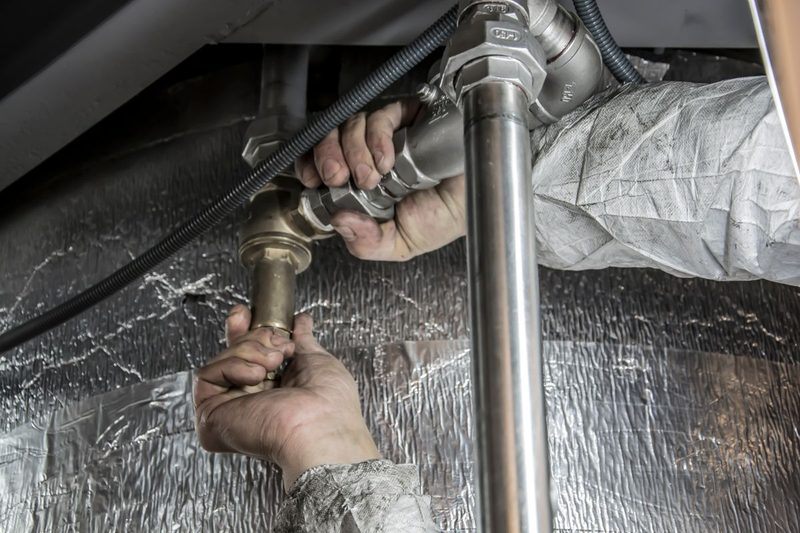
The pipe run needs a consistent fall or a consistent rise, never a series of dips. Water sitting in a low point in a 22mm pipe is where blockages start. A good installer will run the vertical lift first, immediately at the unit, then maintain a slight continuous fall to the connection point. Ask how the run is configured and you will learn a lot about who you are dealing with.
The connection into the existing soil stack must be a proper boss connection with a non-return valve, not a push-fit into a convenient hole. And the unit needs an isolating valve and enough access to actually service it - a macerator bricked into a boxed enclosure with no removable panel is a £400 problem the first time it needs clearing.
Use someone who is properly qualified and insured for the plumbing work. You can check a plumber's registration through WaterSafe, the UK register of approved plumbers, and the Chartered Institute of Plumbing and Heating Engineering publishes guidance on standards for domestic installations. Plymouth and the wider South West have a reasonably healthy supply of qualified bathroom installers compared with parts of the South East, but the good ones book out 4 to 8 weeks ahead through spring and summer, so plan accordingly.
Frequently Asked Questions
Can a macerator be the only toilet in my Plymouth home? No. Approved Document H is clear that a WC discharging through a macerator should not be the only WC in the property, because the unit stops working in a power cut. There needs to be access to a conventionally gravity-drained WC in the same building. For anyone adding a second bathroom, cloakroom or en-suite, this condition is already met.
How much does a macerator bathroom cost to install in Plymouth? A straightforward cloakroom with a basic WC-and-basin unit typically comes to £900 - £1,300 fitted. A loft en-suite with a heavy-duty unit handling a shower, longer pipe runs and full making-good runs £1,600 - £2,200. Compare that with £2,400 - £4,500 for new gravity drainage to the same location, and the saving is usually £1,000 or more.
How long does a macerator last? Ten to fifteen years with sensible use and occasional descaling, and three to six years in a household that flushes wet wipes and cotton buds. Plymouth's soft Dartmoor water helps - limescale is the main killer of these units in hard-water regions, and it is far less of a problem here. Replacing just the unit and reusing the pipework costs £450 - £900.
Are macerators noisy? They run at roughly 55 - 65 decibels for a 10 to 20 second cycle, which is comparable to a dishwasher. Below a bedroom it is noticeable. Anti-vibration mounts and an acoustically lined, ventilated enclosure cut it substantially and cost £80 - £150 extra at installation. Fitting that at the start is much cheaper than retrofitting it later.
Do I need Building Regulations approval for a new bathroom with a macerator? Yes, but not because of the macerator. Adding any new bathroom or WC on a new drainage run is notifiable work regardless of how it drains. Expect a Building Control application through Plymouth City Council or an approved inspector, typically £300 - £600. Some plumbing elements can be self-certified by a registered installer, but the drainage work generally cannot.
You might also like
Bathroom Fitters Plymouth