
Paying a Bathroom Fitter in Plymouth: Deposits, Stage Payments and How to Protect Your Money
The average full bathroom refit in Plymouth now runs between £6,500 and £11,000, and that money changes hands in stages over roughly two to three weeks. Get the schedule right and you never think about it again. Get it wrong and you're one of the 20,000-odd households a year who report a home improvement dispute to Citizens Advice, most of which come down to money paid before work was done. Around 42% of Plymouth's housing stock was built before 1945, which means a high proportion of bathroom jobs here uncover something behind the wall, and that makes clear payment terms more useful than they'd be on a new build. Here's what a fair payment structure looks like in 2026, what a deposit is actually for, and the points where you should stop and ask a question before transferring anything.
What a Deposit Is Actually Paying For
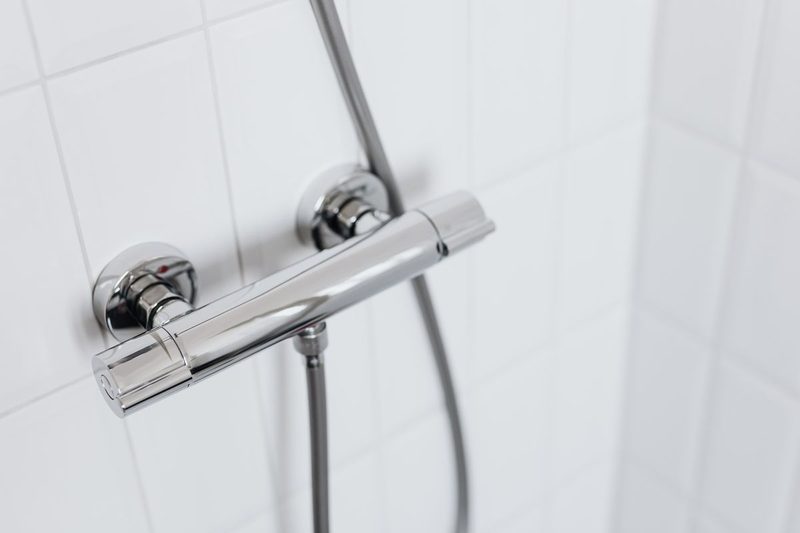
A deposit is not a gesture of good faith and it is not the fitter's wages. It covers money the installer has to spend before the first day on site: the suite, the tiles, the shower valve, the brassware, and whatever has to be ordered in with a lead time.
That matters because it tells you what a reasonable figure looks like. If you've chosen a £2,800 suite and £900 of porcelain tile, a deposit somewhere around £3,000 to £3,700 is doing an obvious job. If your fitter is supplying labour only and you're buying the suite yourself from a showroom on Marsh Mills, a deposit of more than a few hundred pounds has nothing to pay for.
The rough benchmark most reputable Plymouth installers work to is 25% to 40% of the total, and it should track the materials cost rather than being a flat percentage plucked from the air. Ask what the deposit covers. A fitter who can itemise it is a fitter who has actually priced the job. If you want someone to talk the numbers through before you commit, our team can walk you through a written schedule at quote stage rather than after you've paid.
When the Deposit Figure Should Worry You
Anything over 50% up front, on any job, at any price point. There is no legitimate reason for it. A fitter with trade accounts does not need half the contract value to buy a bath.
The other one is a deposit demanded in cash, or to a personal account with a different name from the business on the quote. Both remove your ability to raise a chargeback or claim under section 75 later, and both are the single most common feature of the jobs that go wrong.
The Payment Schedule That Actually Works
For a standard Plymouth bathroom of 8 to 12 days on site, a four-point schedule covers both sides properly.

- Deposit on order, covering materials: 25% to 40%
- Second payment at first fix, once the strip-out is done and pipework and cabling are in: 25%
- Third payment at second fix, when the suite is set, tiled and running: 25%
- Final balance on completion, after the snagging list is cleared: 10% to 20%
The important number is the last one. Holding back 10% to 20% until the snagging is signed off is the only real leverage you have, and it is completely standard in the trade. A fitter who wants the full balance the moment the shower runs has removed your incentive to be fussy and their incentive to come back.
Two smaller points. Payments should be tied to work completed, never to dates in the calendar, because a delayed tile delivery should not trigger a payment. And every payment should be invoiced, with the business name, address and VAT number if they're registered.
Your Legal Position if Things Go Wrong
The Consumer Rights Act 2015 is the law doing the heavy lifting here. Work must be carried out with reasonable care and skill, within a reasonable time, and at a reasonable price where none was agreed. If it isn't, you're entitled to have it put right, and if that fails, to a price reduction.
The practical consequence people miss is this: paying for work that hasn't been done yet weakens you. The Act protects the quality of work performed, not money handed over speculatively. A £4,000 deposit on an £8,000 job where the fitter has stopped answering the phone is a debt recovery problem, not a consumer rights one, and those are slow and often fruitless.
Three protections are worth knowing about. Pay any deposit over £100 by credit card and section 75 of the Consumer Credit Act makes the card provider jointly liable for the whole contract value, not just the amount you put on the card. Debit card payments may be recoverable through chargeback, though the window is usually 120 days. And Citizens Advice consumer guidance walks through the letter-before-action process if you need to escalate, which resolves a surprising number of cases on its own.
Contracts and Written Quotes
A quote on a folded sheet of A4 is not a contract, but a detailed written quote that you accept in writing effectively becomes one.
Get the following in writing before any money moves: the total price and whether it includes VAT, an itemised list of what the fitter supplies versus what you supply, the start date and estimated duration, the payment schedule with the trigger for each stage, what happens to the price if hidden problems are found, and the guarantee period on workmanship.
That "hidden problems" clause is the one that matters most in Plymouth. In the Victorian and Edwardian terraces of Stoke, Mutley and Greenbank, and across the post-war rebuild housing in the city centre, it is genuinely common to open a bathroom floor and find rotted joist ends, lead supply pipe, or a soil stack that has been boxed in and quietly leaking for years. A good quote says what the hourly rate or day rate is for that additional work, so you're not negotiating from a position of a bathroom that's already in a skip.
Variations Should Be Priced Before They're Done
If you change your mind about the tiles halfway through, or the fitter finds a problem, that's a variation. It should be written down, priced, and agreed before the work happens, even if it's just a text message confirming "£340 to replace the two joist ends, agreed".
This sounds bureaucratic. It takes about forty seconds and it removes the single most common source of final-bill arguments. Our guide to bathroom snagging and guarantees in Plymouth covers what to inspect when that final payment comes due.
Deposit Protection and Warranty-Backed Schemes
Some installers offer insurance-backed guarantees or deposit protection through a trade body, and it is worth understanding what you're getting.

TrustMark is the government-endorsed quality scheme, and registered firms must operate a complaints process and carry appropriate insurance. Federation of Master Builders members are independently inspected and can offer warranties covering work if the original firm ceases trading. Neither guarantees a perfect job, but both give you a route that isn't the small claims court.
The realistic picture is that many excellent small bathroom firms in Plymouth belong to neither, because the annual fees are hard to justify on a two-person operation. Membership is a positive signal, not a requirement. What matters more is public liability insurance of at least £2 million, a checkable trading history, and recent local addresses you can drive past.
Paying the Right Trades for the Right Parts
A bathroom refit pulls in several disciplines, and two of them carry legal certification requirements that affect when you should release money.
Electrical work in a bathroom falls under Part P of the Building Regulations. New circuits, or work in zones 0, 1 and 2 around the bath and shower, must be either done by a registered competent person who self-certifies, or notified to Plymouth City Council building control. You should receive an electrical installation certificate. Do not release the final payment without it, because you will need it when you sell the house.
Gas work, where a boiler or heating is touched, must be carried out by a Gas Safe registered engineer, and you should get the paperwork on the day. Unvented hot water cylinders need a G3 qualification. Plymouth City Council's building control service can confirm what needs notifying if you're unsure, and it's a five-minute phone call rather than a formal application.
A structural point specific to older Plymouth homes: if the work involves moving a soil stack or altering a load-bearing wall, that's a building regulations job in its own right, with its own inspection and its own completion certificate. Treat that certificate as a payment trigger too.
What to Do if a Job Stalls
Stalls happen for boring reasons more often than dishonest ones. A fitter's van breaks down, a supplier back-orders a shower tray, someone gets ill. The difference between a delay and a problem is communication.
Set a marker early. If you haven't seen anyone or heard a specific plan for five working days, put it in writing: an email or text asking for a revised completion date and confirming which stage payments are now on hold. Keep every reply. That paper trail is what makes a claim or a chargeback straightforward rather than a he-said-she-said.
Do not pay ahead to "help with cash flow". It is the request that precedes almost every abandoned job, and it converts a recoverable position into an unrecoverable one. If a fitter genuinely cannot buy the tiles without more money from you, they cannot afford to finish your bathroom.
Frequently Asked Questions
How much deposit should a bathroom fitter ask for in Plymouth?

Usually 25% to 40% of the total, and it should broadly match the cost of materials the fitter is buying up front. Anything over 50% has no legitimate justification, and a labour-only job should carry a much smaller deposit or none at all.
Should I pay a bathroom fitter in cash?
No. Paying by credit card gives you section 75 protection on the full contract value for any payment over £100, and bank transfer at least gives a clear record. Cash removes every recovery route you have if the job goes wrong.
How much should I hold back until the job is finished?
Between 10% and 20% of the total, released once the snagging list is cleared and you have the electrical certificate and any building regulations paperwork. This is standard practice and a reputable fitter will expect it.
What if my Plymouth bathroom fitter finds hidden damage?
Additional work should be priced and agreed in writing before it is carried out. Older Plymouth properties frequently hide rotted joists, lead pipework or leaking soil stacks, so ask at quote stage what the day rate is for unforeseen work.
```json { "@context": "https://schema.org", "@type": "FAQPage", "mainEntity": [ { "@type": "Question", "name": "How much deposit should a bathroom fitter ask for in Plymouth?", "acceptedAnswer": { "@type": "Answer", "text": "Usually 25% to 40% of the total, and it should broadly match the cost of materials the fitter is buying up front. Anything over 50% has no legitimate justification, and a labour-only job should carry a much smaller deposit or none at all." } }, { "@type": "Question", "name": "Should I pay a bathroom fitter in cash?", "acceptedAnswer": { "@type": "Answer", "text": "No. Paying by credit card gives you section 75 protection on the full contract value for any payment over £100, and bank transfer at least gives a clear record. Cash removes every recovery route you have if the job goes wrong." } }, { "@type": "Question", "name": "How much should I hold back until my bathroom is finished?", "acceptedAnswer": { "@type": "Answer", "text": "Between 10% and 20% of the total, released once the snagging list is cleared and you have the electrical installation certificate and any building regulations paperwork. This is standard practice and a reputable fitter will expect it." } }, { "@type": "Question", "name": "What if my Plymouth bathroom fitter finds hidden damage?", "acceptedAnswer": { "@type": "Answer", "text": "Additional work should be priced and agreed in writing before it is carried out. Older Plymouth properties frequently hide rotted joists, lead pipework or leaking soil stacks, so ask at quote stage what the day rate is for unforeseen work." } } ] } ```
```json { "@context": "https://schema.org", "@type": "Article", "headline": "Paying a Bathroom Fitter in Plymouth: Deposits, Stage Payments and How to Protect Your Money", "description": "How much deposit should a Plymouth bathroom fitter ask for, when should each stage payment fall due, and what happens if the job stalls halfway? A plain guide to payment schedules, your rights, and the red flags worth walking away from.", "author": { "@type": "Organization", "name": "The Team" }, "datePublished": "2026-09-18", "dateModified": "2026-09-18", "articleSection": "Bathroom Installation" } ```
You might also like
Bathroom Fitters Plymouth