
Bathroom Condensation and Mould in Plymouth: Causes, Fixes, and Costs
If you're wiping down the bathroom window every morning and repainting a black-speckled ceiling every couple of years, the problem isn't the paint. A single hot shower puts roughly 1 to 1.5 litres of water into the air, and in a Plymouth bathroom that water has nowhere friendly to go. The city sees around 1,000mm of rain a year and outdoor humidity that regularly sits above 80% from October through March, so the "just open a window" advice that works in drier parts of the country often does nothing here except let more damp air in. English Housing Survey figures have consistently put around 4% of English homes with a damp problem in at least one room, and bathrooms in older coastal housing are heavily over-represented. Here's what's actually going wrong, what fixes it, and what each option costs in Plymouth.
Why Plymouth Bathrooms Suffer More Than Most
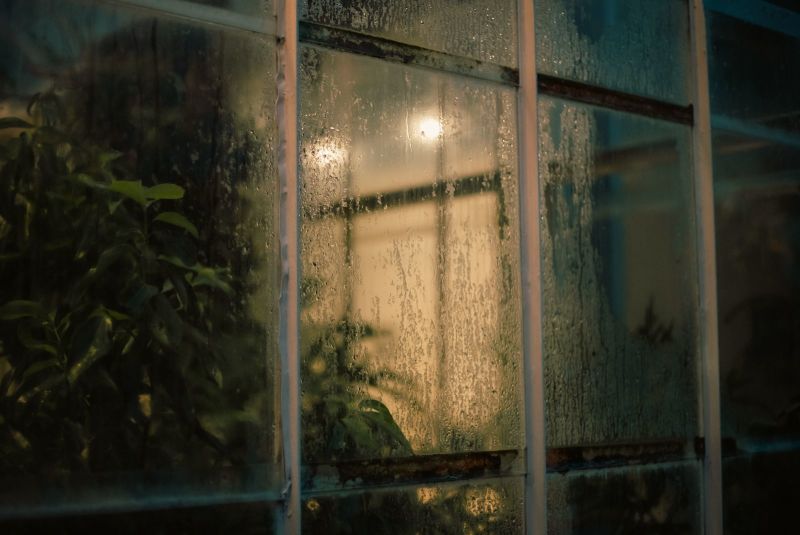
Condensation forms when warm, wet air touches a surface that's colder than its dew point. Plymouth stacks the odds in favour of that happening. It's a coastal naval city on the Sound, mild rather than freezing, which sounds harmless until you realise mild and wet is exactly the combination mould likes. Black mould germinates happily at surface humidity above 80% and temperatures between 5°C and 25°C, and Plymouth's winters sit inside that window for months at a time rather than dropping cold enough to stop it. If your ceiling keeps going black no matter how often you clean it, Bathroom Fitters Plymouth can take a look and tell you whether it's ventilation, insulation or something behind the wall.
The housing stock makes it worse. Roughly 30% of Plymouth's homes predate 1945, and the city's large stock of 1950s and 60s rebuild-era properties came with solid or lightly insulated walls, single-skin rear extensions and bathrooms tacked onto the back of the house with three external walls. A bathroom with three cold external walls generates far more condensation than an internal one, all else being equal.
Then there's how we live now. Households take more showers than they did when these houses were built, windows are sealed better than they were, and drying washing indoors through a wet Devon winter adds another 2 to 3 litres of moisture per load into the air. The house got tighter, the moisture went up, and the ventilation mostly stayed where it was in 1962.
Working Out What Kind of Damp You Actually Have
Not all black patches are condensation, and treating the wrong problem is the most common reason mould keeps coming back. It's worth spending ten minutes diagnosing before spending money.
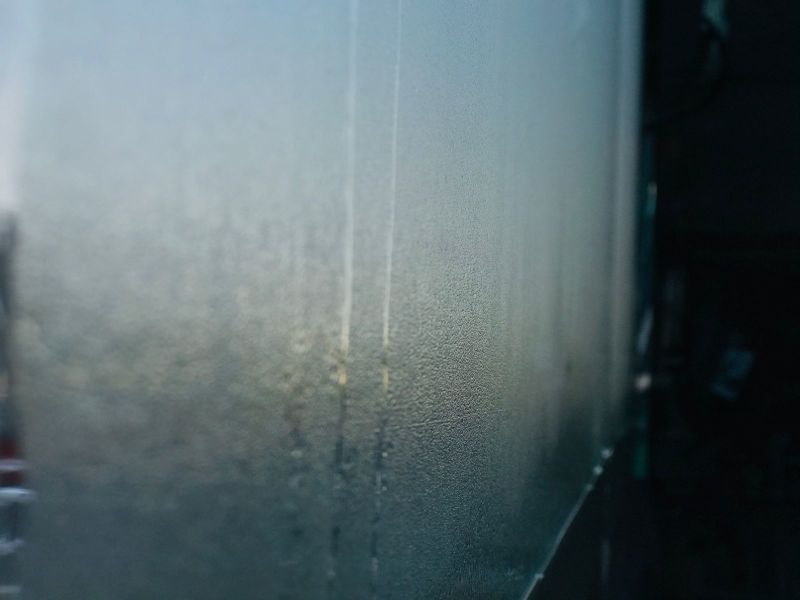
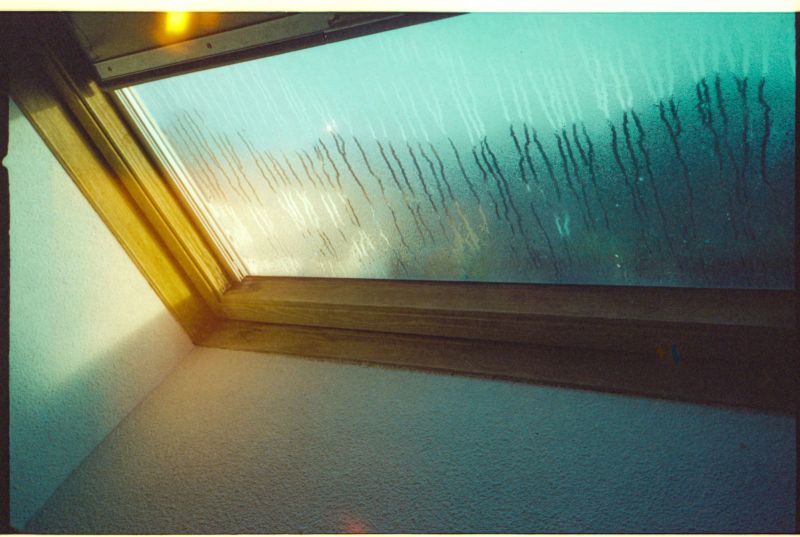
Condensation damp appears on cold surfaces - the ceiling above the shower, the window reveals, the outside corner of an external wall, the back of a wardrobe on a north-facing wall. It's usually black speckling, it's worst in winter, and it wipes off surfaces rather than staining through from behind.
Penetrating and Plumbing Damp Look Different
Penetrating damp comes through from outside - failed pointing, a cracked render patch, a blocked gutter, a slipped slate. In a wind-driven-rain city like Plymouth this is genuinely common on south-westerly-facing elevations, and it shows as a defined patch that gets darker after heavy rain rather than after a shower. Plumbing leaks show as a patch that never dries out regardless of weather. A rough rule of thumb we'd use: if it's worse after a shower it's condensation, if it's worse after a storm it's the building fabric, and if it's the same every day it's a leak.
What Damp and Mould Do to the People Living There
This is the part homeowners usually underestimate. Mould spores and the dust mites that thrive in damp air are a genuine respiratory irritant, and the effect is strongest on children, older people and anyone with asthma or a weakened immune system. The NHS guidance on whether damp and mould can affect your health is worth two minutes of reading if anyone in the house has a chest condition.

The government has taken the issue considerably more seriously in recent years too. The joint DLUHC and UKHSA guidance on understanding and addressing the health risks of damp and mould in the home sets out clearly that damp and mould should be treated as a hazard rather than a lifestyle issue, and that the responsibility sits with fixing the building, not with telling people to open windows more.
For homeowners the practical takeaway is simple. If someone in the house has asthma and the bathroom ceiling is black, the mould is a health item on the list, not a decorating item. It also spreads: an untreated bathroom mould problem commonly migrates to the ceiling of the adjoining bedroom within a couple of years.
Cold Surfaces: The Bit Everyone Forgets
Ventilation gets all the attention, but condensation is a two-sided problem. You can remove moist air, or you can stop surfaces being cold enough for moisture to condense on. Fixing only one side is why some homeowners fit a decent fan and still get mould in one stubborn corner.

Cold spots in Plymouth homes are predictable. Solid 9-inch brick walls run several degrees colder than a cavity wall. Uninsulated single-storey rear extensions - very common on the back of Plymouth terraces - lose heat through both walls and a shallow roof. Original steel or aluminium window frames act as thermal bridges even with modern glazing units in them.
Warming the room helps more than people expect. Keeping a bathroom at a steady 18°C to 20°C rather than letting it swing from 12°C to 25°C twice a day dramatically cuts condensation, because the surfaces never get cold enough to hit dew point. A heated towel rail on a timer, or 3 to 5 square metres of underfloor heating at roughly £400 to £900 fitted, often does as much for a damp bathroom as an extraction upgrade does.
Fixes Under £100 and What They Won't Solve
Some things genuinely help and cost very little. Running the existing extractor for 15 to 20 minutes after every shower rather than switching it off with the light is free and can cut peak humidity meaningfully. A £10 to £15 hygrometer tells you whether the room is actually returning to below 60% relative humidity within half an hour, which is the number that matters. Anti-mould additive for paint costs about £8 to £15 a tin and buys you time on a ceiling.

Cleaning the fan grille and checking the external vent flap is another free win. We'd estimate a third of the "broken" fans we look at in Plymouth are simply clogged with dust or have an external grille jammed shut by paint, salt residue or a bird's nest.
What none of this fixes is a fan that was never powerful enough, ducting that vents into a loft, or a wall that's cold because it isn't insulated. If you've done all the cheap things and the mould is back within six months, the problem is structural and no amount of anti-mould paint will hold it.
Proper Fixes and What They Cost in Plymouth
Here's a realistic price list for the fixes that actually solve the problem rather than delay it:

Humidity-sensing extractor upgrade, existing ducting reused: £120 to £300 fitted. The cheapest real fix, and the right first step in most cases.
New fan with corrected ducting to an external wall or soffit: £250 to £550. Necessary if the existing run is long, kinked, or dumping into the loft.
Continuous low-rate extraction or a dMEV unit: £350 to £700 fitted. Best for busy family bathrooms with back-to-back morning showers.
Insulated plasterboard on a cold external wall: £45 to £90 per square metre, so roughly £400 to £900 for one wall in a typical bathroom.
Heated towel rail or underfloor heating for background warmth: £250 to £900 depending on type and area.
Full strip-out, tank and refit where the substrate is rotten: £3,500 to £7,000.
Building Regulations set a minimum extraction rate of 15 litres per second for an intermittent bathroom fan, and the detail sits in the government's Approved Document F on ventilation. A fan rated at 15 l/s on the box can deliver as little as 8 or 9 l/s once it's fitted to 4 metres of flexible ducting with three bends in it, which is why the ducting is worth as much attention as the unit.
If You Want the Detail on Extraction Itself
Choosing between intermittent, continuous and humidity-sensing systems is a topic in its own right, and our guide to bathroom ventilation and extractor fans in Plymouth homes goes through the options, the ducting rules and what to ask for. This post is about the damp problem; that one is about the kit that solves it.
Getting Rid of Existing Mould Without Making It Worse
Once the cause is fixed, clean the mould properly. Don't dry-brush it - that flicks spores into the air you're breathing. Wipe with a damp cloth and a proprietary mould remover or a diluted bleach solution, open the window while you work, wear gloves, and bin the cloth afterwards rather than washing it out in the sink.

Silicone sealant that has gone black is done. Mould grows into the material rather than sitting on it, so no cleaner will restore it - it needs cutting out and replacing, which is a £60 to £150 job across a bath and a shower tray. The same is true of blown grout, mouldy plasterboard behind tiles, and any chipboard floor that has gone soft.
If mould returns within about six months of a proper clean and a ventilation fix, something behind the surface is wet. In Plymouth's older stock that's often failed tanking behind a shower, a rotten timber lintel over a window, or an external wall taking wind-driven rain. That's the point to stop redecorating and get the fabric checked.
When It's Time to Rip It Out and Start Again
There's a threshold where patching stops making financial sense. If the plasterboard behind the tiles is soft, if the floor gives underfoot near the shower, or if you're on your third round of resealing in five years, you're paying for the same problem repeatedly.
As a rough guide, once accumulated repairs pass roughly 40% of the cost of a full refit, replacing is usually the better call - especially in a Plymouth property where a proper refit lets you tank the wet areas, insulate a cold wall and duct a new fan correctly all in one go rather than three separate disruptions. A full bathroom refit here typically runs 1.5 to 3 weeks and £4,000 to £8,000 including the suite.
The upside is that a bathroom rebuilt with all three problems addressed together - extraction, insulation and waterproofing - simply stops having the mould conversation. We'd expect a properly specified Plymouth bathroom to go 15 to 20 years without a damp issue, coastal climate and all.
---
FAQ
Q: Why does my Plymouth bathroom get so much condensation?
A: A single hot shower releases around 1 to 1.5 litres of water into the air, and Plymouth's mild, wet coastal climate means outdoor humidity is often above 80% through winter, so opening a window brings in damp air rather than drying the room. Add solid or lightly insulated walls in the city's pre-1945 and 1950s-60s housing and you get cold surfaces for that moisture to condense on. It's usually a combination of weak extraction and cold walls rather than one single fault.
Q: How do I tell condensation damp from a leak or penetrating damp?
A: Condensation appears on cold surfaces such as ceilings above the shower, window reveals and external wall corners, shows as black speckling, and is worst in winter and right after showers. Penetrating damp is a defined patch that darkens after heavy rain, which is common on south-westerly-facing Plymouth elevations. A plumbing leak produces a patch that never dries out regardless of the weather.
Q: What does it cost to fix bathroom condensation in Plymouth?
A: A humidity-sensing extractor fitted to existing ducting costs £120 to £300. A new fan with corrected ducting runs £250 to £550, and continuous low-rate extraction is £350 to £700. Insulating one cold external wall costs roughly £400 to £900, and adding background heat such as a heated towel rail or underfloor heating is £250 to £900. A full strip-out and refit where the substrate has rotted is £3,500 to £7,000.
Q: Is bathroom mould actually bad for your health?
A: Yes. Mould spores and the dust mites that thrive in damp air irritate the airways, and the effect is strongest on children, older people and anyone with asthma or a weakened immune system. Government guidance now treats damp and mould as a housing hazard to be fixed at the building level rather than something residents should manage by opening windows.
Q: Why does the mould keep coming back after I clean it?
A: Because cleaning removes the symptom, not the cause. If surface humidity is still hitting 80% and the wall is still cold, the mould returns within months. Black silicone and mouldy grout also can't be cleaned back, since mould grows into the material and the sealant needs cutting out and replacing at around £60 to £150. Recurrence within six months of a proper fix usually means something behind the surface is wet.
---
You might also like
Bathroom Fitters Plymouth