
Shower Types in Plymouth: Thermostatic, Electric and Digital Compared for 2026
Pick the wrong shower and you will find out on the first cold morning. Around 60% of UK homes now run a combi boiler, and in Plymouth that share is higher in the post-war estates of Ernesettle, Whitleigh and Estover while the Victorian terraces of Stoke, Peverell and Mutley are more likely to still have a hot water cylinder in the airing cupboard. Those two setups want completely different showers. South West Water supplies most of the city at a mains pressure of roughly 1.5 - 3 bar, which is enough for some shower types and marginal for others. This guide covers the four shower types you will actually be choosing between in a Plymouth bathroom, what each one costs fitted in 2026, and how to work out which your house can run before you buy anything.
Start With What Your House Already Has
Nobody chooses a shower in a vacuum. The heating system decides most of it before you have looked at a single showerhead.

If you have a combi boiler, you have no stored hot water and no cold water tank. Water arrives at mains pressure and is heated on demand. That rules out anything needing a pump, and it means the shower's performance is capped by your incoming mains flow rate - typically 10 - 16 litres per minute in Plymouth, occasionally lower on long runs in older properties. If you have a vented cylinder with a cold tank in the loft, you have low-pressure gravity-fed hot water, often under 0.5 bar on a first floor bathroom, and you will need a pump for anything that feels like a proper shower. If you have an unvented cylinder such as a Megaflo, you have stored hot water at mains pressure and you can run essentially whatever you like.
Before you spend anything, measure your flow rate. Run the cold kitchen tap flat out into a bucket for 30 seconds and double it. Under 10 litres a minute changes the answer. Plymouth Bathroom Fitters will check flow and pressure as part of a quote, which saves the fairly common Plymouth experience of buying a rainfall head that the house cannot feed.
Thermostatic Mixer Showers: The Default for Most Plymouth Homes
A thermostatic mixer blends stored hot and cold water and holds the temperature steady when something else in the house draws water. That temperature stability is the whole point. Without it, someone flushing a toilet downstairs sends a spike through the shower.

Fitted cost in Plymouth in 2026 runs £250 - £600 for a decent bar mixer including labour, and £450 - £1,100 for a concealed valve where the mechanism is buried in the wall and only the control plate shows. Concealed looks far better and costs more because the wall has to be chased out, which on a solid Victorian party wall in Stoke is real work.
Two things to check. First, that the valve is rated for your pressure - most modern thermostatic valves want a minimum of 1 bar, and low-pressure versions exist for gravity systems. Second, that it carries approval under the Water Regulations, since backflow protection is a legal requirement; WRAS publishes the approved products directory if you want to confirm a specific model.
Where Mixer Showers Go Wrong
The usual failure in Plymouth is a combi boiler with a modulation range that cannot cope with a low flow. Turn the shower down to a trickle and the boiler cycles off, giving you the cold-then-scalding pattern people blame on the valve. It is usually the boiler, not the shower.
Electric Showers: Independent of the Boiler
An electric shower heats mains cold water at the point of use with an internal element. It does not touch your hot water at all, which makes it useful in a second bathroom, an en-suite, or any house where the boiler is old and unreliable.

The trade-off is flow. A 9.5kW unit delivers roughly 5 litres per minute at a comfortable winter temperature. An 8.5kW unit delivers less. That is a modest shower by modern standards, and it gets worse in winter because the incoming mains temperature in Plymouth drops from around 15C in September to 6 - 8C in February, meaning the same element has more work to do. People often think their electric shower is failing in January. It is doing what the physics allows.
Fitted cost is £350 - £700 including the electrical work, assuming a suitable consumer unit. It needs its own dedicated RCD-protected circuit in heavy cable, and that cable run is often what drives the price on an older Plymouth property with a rewire pending. Anything electrical in a bathroom falls under Part P of the Building Regulations, and Electrical Safety First is worth a read on why bathroom zones matter.
Power Showers: Only for Gravity Systems
A power shower is a mixer with a pump built in, designed for gravity-fed systems with a cylinder and loft tank. On a combi or unvented system it is not just unnecessary, it is not allowed - you cannot legally pump directly from the mains.

For a Plymouth terrace still running a vented cylinder, a power shower transforms a dribble into a genuine 12 - 15 litres per minute. Fitted cost is £400 - £800. The catch is that at that flow rate a standard 117 litre cylinder gives you around eight to ten minutes of hot water, so a family of four needs to think about cylinder size or reheat times.
Digital Showers: Worth It or Not?
A digital shower separates the control panel from the mixing unit, which sits in the loft or under the bath. You get precise temperature to the degree, remote start, sometimes an app, and a very clean wall with just a small control plate.
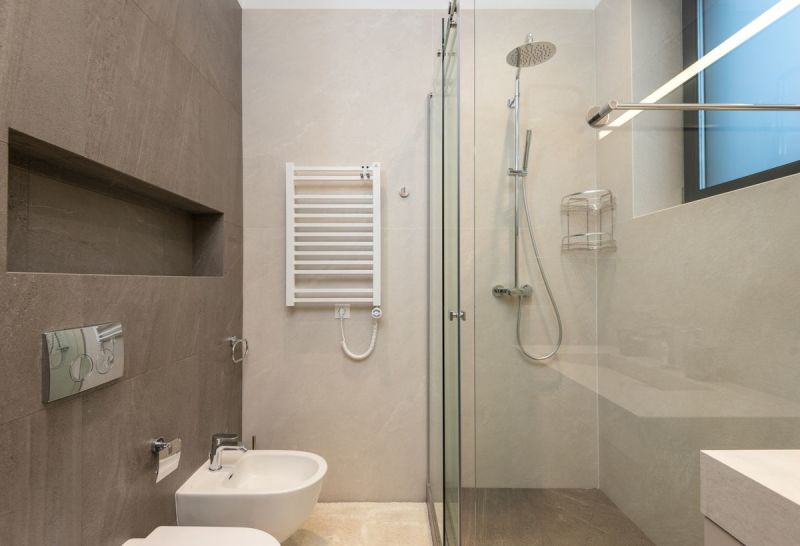
Fitted cost is £900 - £2,200. That is a lot of money for temperature accuracy, and I would not pretend otherwise. Where they earn it is in awkward layouts - a wet room where you want the controls outside the spray, a bathroom where the pipework route makes a concealed thermostatic valve impossible, or a household where someone needs a fixed safe maximum temperature. For a standard bathroom refit in Plymouth, a good concealed thermostatic valve at half the price does the same job.
The genuine downside is repairability. When the processing unit fails outside warranty, you are replacing a proprietary part rather than a standard cartridge, and the loft-mounted unit is not where you want a leak.
What Plymouth's Water Actually Does to Shower Valves
Plymouth's water comes largely from Burrator and the Dartmoor catchment and is soft, typically under 50 mg/l calcium carbonate. That is genuinely good news: limescale, which destroys shower cartridges and blocks heads across the south east of England, is a minor issue here.

Soft water brings a different problem. It is slightly more aggressive towards certain metals and can accelerate wear on cheap brass fittings and chrome plating. Coastal air adds to it. Homes in Plymstock, Hooe and Turnchapel see salt-laden air that pits budget chrome within a few years, especially where a bathroom is under-ventilated and holds moisture.
The practical answer is to spend on the valve body and not the showerhead. A solid brass thermostatic cartridge from an established brand will outlast three cheap ones, and the head is the easy part to replace later.
Getting the Flow Right
If your shower feels weak, the valve is often not the problem. Pressure loss through undersized 15mm pipework, a partially closed isolating valve, or a blocked flow restrictor accounts for most complaints. We have covered what causes low water pressure in Plymouth bathrooms and how shower pumps fix it in more depth, and it is worth reading before you replace a valve that may be working fine.
Matching the Shower to the Room
An en-suite off a bedroom in a 1970s Plymouth semi rarely justifies a digital system. An electric shower there keeps the load off the boiler and lets two people shower at once, which is the actual daily benefit.

A main family bathroom with an unvented cylinder should get a good concealed thermostatic valve and a fixed head of 200mm or larger, plus a handset on a riser for cleaning the enclosure and washing children. Budget £700 - £1,400 fitted for the valve, head and handset together.
A wet room wants a thermostatic valve with the controls positioned so you can reach in without getting soaked, and a flow rate matched to the drainage. Overspecifying flow in a wet room floods it. Around 12 litres per minute is the sensible ceiling for a standard 50mm waste.
What to Ask Before You Commit
Ask the fitter to confirm your static pressure and dynamic flow rate in writing, not by eye. Ask whether the valve chosen is rated for that pressure. Ask what happens to the temperature when the kitchen tap runs, and expect a specific answer.

Ask about the cartridge. Is it a standard part still in production, or a discontinued proprietary unit? A shower that cannot be repaired in eight years is a shower you buy twice. Which? publishes independent reliability data by brand and it is a better guide than showroom display boards.
Finally, ask where the isolating valves go. Every shower should have accessible service valves. Fitters who bury them behind tile without an access panel are storing up a bathroom rip-out for whoever comes next.
Frequently Asked Questions
Can I fit a power shower with a combi boiler in Plymouth?

No. A power shower contains a pump, and pumping directly from the mains supply is not permitted under the Water Regulations. A combi already delivers water at mains pressure, so a pump would achieve nothing anyway. If your combi shower feels weak, the limit is your incoming mains flow rate, and the fix is checking pipework sizing and flow restrictors rather than adding a pump.
How much does it cost to replace a shower in Plymouth in 2026?
A like-for-like bar mixer swap is £150 - £300. A new thermostatic bar mixer fitted is £250 - £600. A concealed valve with chasing and making good is £450 - £1,100. An electric shower including the dedicated circuit is £350 - £700. A digital system is £900 - £2,200. Retiling around the new valve adds £200 - £500 depending on area.
Do I need a bigger cylinder for a better shower?
Only if you are on a gravity or unvented cylinder system and running out of hot water rather than pressure. A 117 litre cylinder supports roughly two back-to-back showers at 12 litres per minute. Households of four or more using a high-flow shower usually want 180 - 210 litres. If you are on a combi, cylinder size is irrelevant - you cannot run out, but you cannot exceed the boiler's flow rate either.
Is limescale a problem for showers in Plymouth?
Much less than in most of England. Plymouth's supply from the Dartmoor catchment is soft, generally under 50 mg/l, so scale build-up in valves and heads is slow. The more common local wear issue is corrosion of cheap chrome and brass, particularly in coastal areas like Plymstock and Hooe where salt air and poor bathroom ventilation combine.
```json { "@context": "https://schema.org", "@type": "FAQPage", "mainEntity": [ { "@type": "Question", "name": "Can I fit a power shower with a combi boiler in Plymouth?", "acceptedAnswer": { "@type": "Answer", "text": "No. A power shower contains a pump, and pumping directly from the mains supply is not permitted under the Water Regulations. A combi already delivers water at mains pressure, so a pump would achieve nothing. If your combi shower feels weak, the limit is your incoming mains flow rate, and the fix is checking pipework sizing and flow restrictors rather than adding a pump." } }, { "@type": "Question", "name": "How much does it cost to replace a shower in Plymouth in 2026?", "acceptedAnswer": { "@type": "Answer", "text": "A like-for-like bar mixer swap is £150 to £300. A new thermostatic bar mixer fitted is £250 to £600. A concealed valve with chasing and making good is £450 to £1,100. An electric shower including the dedicated circuit is £350 to £700. A digital system is £900 to £2,200. Retiling around the new valve adds £200 to £500." } }, { "@type": "Question", "name": "Do I need a bigger cylinder for a better shower?", "acceptedAnswer": { "@type": "Answer", "text": "Only if you are on a gravity or unvented cylinder system and running out of hot water rather than pressure. A 117 litre cylinder supports roughly two back-to-back showers at 12 litres per minute. Households of four or more using a high-flow shower usually want 180 to 210 litres. On a combi, cylinder size is irrelevant." } }, { "@type": "Question", "name": "Is limescale a problem for showers in Plymouth?", "acceptedAnswer": { "@type": "Answer", "text": "Much less than in most of England. Plymouth's supply from the Dartmoor catchment is soft, generally under 50 mg/l, so scale build-up in valves and heads is slow. The more common local wear issue is corrosion of cheap chrome and brass, particularly in coastal areas like Plymstock and Hooe where salt air and poor bathroom ventilation combine." } } ] } ```
You might also like
Bathroom Fitters Plymouth